9 March 2012

Case Study: Woolworths Supermarket's new App - thinking distributed

Note, for UK readers: Australian Woolworths isn't quite the same as the now closed UK Store of the same name. Rather than a purveyor of cheap crap, its a supermarket and one that heads more towards quality then affordability (not that its expensive, you understand), but its Veg is better than any of the supermarkets that I've found in my 8 weeks of being here.

Woolies recently launched their new smart phone ap, and in doing so revealed their understanding of the post-internet consumer and demonstrate their ability to re-imagine their business not just as a supermarket but as a key part of the eating experience, as a platform upon which meals are built.

Check out the promo video before I share some thoughts...


The app is built around the promise of you doing your shopping when you want, and about making it easier for you to interact with their physical stores should you opt to go into them. Or, if thinking about things from the perspective of Jeff Jarvis' rules outline in his book What Would Google Do, then they are seeking to tick off the following boxes:
- Think Distributed (find ways to go to your customers, rather than make them come to you)
- Get out the way (make things as simple for customers as possible)
- Speed is Key (the internet and Google search has made customers want things NOW!)

They understand that, for example, after finishing work you might be sat on the tram, thinking about dinner. You can use this journey time to choose a recipe for dinner and create an aisle based list for your local store so you can hop of the tram, quickly dash in, grab your stuff and go home and cook it. Woolies are aiming to save you time, make your life easier. Or they understand that you aren't always at home on the computer when you want to order your shopping online. You might want to build your shopping list over 5 days as you use things, plan events, run out of things or just have ideas. Its about providing organization to the process of food shopping, to make it easier for you, the individual, to buy what you want to eat.

Why is this interesting?
Because, in Jarvis' words, "atoms are a drag". Because the internet has changed the way people interact and behave, and even think, and whilst online business have been quick to adapt to this and serve the Customer 2.0, the physical world is lacking. Because atoms, or "stuff" gets in the way. Things like stock cost, buildings, rent, staff, inventory, waste, warehousing, dead stock and many more. The lessons from the digital world have to filter into the physical world for it to keep up, and for shoppers to continue to use physical stores. There is no escaping it. But figuring out how to do it is hard. Not least because most physical stores and businesses are run by the old generation, brought up before the internet revolution and as such are not aware of the changing mindset of the people they sell to, even if they themselves have changed the way they shop.

Ultimately I write this post to commend Woolworths, for stepping out to embrace the consumer 2.0. Its a good sign, that physical stores can do things to become more internet friendly and more usable, less self centred.

However this app isn't perfect.
Woolworths can, and should, go further. Let customers upload their recipes to the system and review others. Make the app, and their site (which should link to it in the future if they are smart and the FAQ on their site is to be believed) into a network for people to share, to become a community and discuss, rate,  review and suggest recipes people could and should cook. Let this app become a resource and a platform, upon which other can build their business model. Let professional chefs upload content to inspire, let people build up knowledge for the collective good of everybody. Woolworths would be the bedrock of a national community of food lovers. Food is about conversation, thats what you do when you share dinner with friends or family; Woolworths should recognise this and turn their distributed platform for sales into a network for a mass of niches. It would build their brand, they would undoubtedly grow sales, but it could also open up new avenues for generating revenue further down the line, such as targeted advertising.

If theis is a first step its huge. The next ones aren't so big, there is no reason Woolworths (and others) shouldn't take it. There are huge rewards to reap. 

4 March 2012

New Look

I'm pleased to say I've (finally) updated the look of this here blog. Less Lo-Fi-Teenage scribble, more, um, simple....

...now settled in my new Home of Fitzroy, Melbourne, Oz I will be getting back to updating this blog and writing in general more frequently. So stay tuned. 

2 March 2012

Balance: The rise of nature in the post-internet age.


The love of technology in the young, western, post-“net” generation is an obvious observation. We, those brought up in the World 2.0 (the world after the spread of the internet, where Google rather than government dominates public thought), readily accept and, to some extent demand technology. How many people under 30 own some form of smart phone, a tablet, have a Facebook account, use Google maps to locate things, turn to Wikipedia for insight into unfamiliar topics and use internet search to empower their lives? Most people, probably. We readily accept a newly public life, a life of managing abundance, of ever growing freedom. Yet never has nature been so “on trend”. Whether its uber cool out-doors company Poler or the rise in cycling obviously exemplified by blogs such as Prolly or the “outdoorsy” feel to contemporary men’s fashion as with the current collection at Present in London or on musicians cover art such as emerging talent Visions of Trees we romanticise and fantasise about nature.

Why? 

Every action has an equal and opposite reaction. Or Zen, or whatever you want to call it, the notion of balance has never before been so easily visually recognisable. The growth in technological advancements, and the hierarchical equalization between the physical and the virtual world has brought about an unexpected yurning for the natural, for the green.

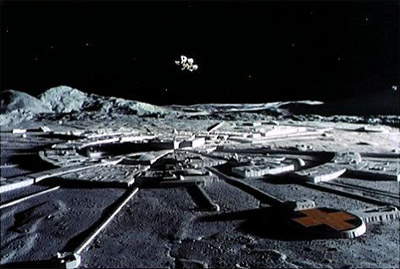
The future landscape depicted in pre-internet sci-fi such as Moonbase Alpha in space 1999 – pictured above – aren’t futures we want to inhabit. The drive for carbon neutral companies and organic produce would suggest that our future should be green. The better that cameras and CGI gets the more we want to watch David Attenborough talk about the Natural World. Viewership and downloads of programmes like the recent Frozen Planet are huge. The young and the trendy stay home from bars to indulge in luscious TV shows (usually watched online) about animals and plants. It fascinates us, natural beauty. The more we are able to leave nature behind the more we want to save it. We want to snorkel the Great Barrier Reef and explore Alaska. The internet, and mobile devises that utilise it, enable us to remain connected to everything from nearly anywhere. That adventure you dreamed of is no longer impossible. Technology will get you there, help you navigate and survive, it will save if you if in trouble and still keep you up to date with the special offers of the supermarket closest your home-town. The internet has flattened cultural differences, we want to see the things that we don’t have close to home, we want to see the wild, because it is different, because our international friends and colleagues make us curious about things that aren’t on our doorstep, that the internet cannot adequately manifest for us.

There is another possible reason too. With the internet making social relations easier and fairer, making shopping simpler and cheaper, making music easily accessible and providing more knowledge then a library, the real world of 20 years ago - dominated by physical spaces - is becoming dull. When you can discover anything from your armchair, even from your phone, the joys of cities could be diminishing. Why go to a museum when you can see and learn more about the ancient world from Wikipedia. Why go to the mall when you can go on Google and find what you want in less time and at a lower price and have it delivered to your door? What the internet can’t offer is the feel of the wind or smell of rain on hot concrete. Nature is in some ways everything Technology isn’t. Its wild, and we love it….

3 December 2011

I'm back.


This blog has been somewhat neglected recently, what with its last post being nearly 9 months ago. In these nine months I met “the one” and watched as a I realised everything was now different. Better, obviously, but I mean more that my outlook on, and understanding of, the world has shifted.
In this time my professional life has also evolved. I’ve become increasing exposed to “code” through working with databases to make sense of information. In essence I have returned to the work I made at University with Kiki Claxton, but rather than working with people I have been working with text and numbers – in essence both un-encoded ‘bits’ of data in the modern computer age.
Its taken this long to feel that I have something to say again, enough jumped up certainty to think I could comment on something again. Between these two developments my understanding has shifted but my core interests have remained, namely the connection between Society, Digital Technology, the Young the Now and the Next
I have in this time become more political then ever before but yet with a complete detachment from the political processes. I am, like much of my contemporaries driven by a desire to make the world better. However unlike the “sit down brigade” of recidivists I am full of optimism. What I think few realise is the change is happening, you just have to look away from government to see it.
In the coming weeks I hope to update this blog more regularly like before, and share my thoughts and opinions on the NOW, looking initially at how I feel the recidivist young not only have it wrong, but are distracting some of the most tenacious and capable of the young and the future.  

28 March 2011

The Rise of the Trans-Disciplinary Cultural producer

Postmodernism died, and now we exist in a twilight that is both almost indistinguishable from Postmodern forms and ideologies and simultaneously non-relativistic, driven by moral conceptions of right. Perhaps this new cultural phenomenon is too young to accurately characterise in any full sense; as Bourriaud proved with his book Altermodern, yet there are certain aspects of this new cultural regime that are transparent and clear.

27 March 2011

Spin off

I've decided to launch a second blog for pictures. Of late I've been posting more and more on here, and its begun to clutter things and obscure other things. Plus I like images alot at the moment, and so felt the need to collate them, publicly.


Click the picture below to head over to the picture site....


23 March 2011

Dachau Leisure Centre: Teaser

I am currently in the process of creating a book. I guess its a bit of an art book, just without art in it. Heres a bit about it:


Things have always changed in to other things. However it wasn’t until the eighties that this notion became ideology. The supposed relativism of the postmodern age instead masked a definitive position on culture. It was this latent paradox that ultimately spelt the death of the movement. However in its wake a new  cultural form has come to light, one that holds similar values of recycling and transformation at its core and all expressed through trans-local and trans-disciplinary enquiry; whats missing is any sense of “right” outside of a context of “cool”.

This entity is intended to exist as a non-narrative exploration of this question of the change of use of objects and ideas in the contemporary moment; to question how culture interacts with time, and how we haunt our own existence through temporally non-delineated visions of the past and future simultaneously.

This object is intended to act like a bad group exhibition; A collection of works in tenuous and uncategorised connection to one another attempt to plot an understanding of something too big to deal with in an encompassing way. It will enact what it intends to critique and ultimately place emphasis on your subjectivity to accumulate meaning.

8 March 2011

Todays question.

If one is totaly convinced this reality will presently be superceeded by a new and more brilliant one, than how does one reconcile themselves to existing within this reality?

4 March 2011

Fuck you O2 broadband.

So I know I haven't posted on here much lately, its not that I have wondered off into another land. I'm writing a killer piece, but its taking for ever. So instead I thought I'd reward your readership with a pointless account of O2 (whom provide my mediocre internet service) who recently told me they were putting up their prices. I wasn't very happy, so I wrote them an email, which they didn't reply to, despite saying they reply to all emails in 8 days (its been 14). Heres what I sent, you can read it if you care.

"To whom it may concern,

I am writing to you with regard to en email I received yesterday announcing the rise of your broadband packages because “Internet use has changed dramatically over the last few years and this is likely to continue.” By this “change” do you mean that the cost of bandwidth is continuing to fall exponentially, and that bandwidth is the most exciting pricing decrease in all technological advancement at the moment (Chris Anderson, “Free, the future of a radical price”). Or do you mean that your customer base has expanded so that in all likely hood you are receiving greater discounts from the Tier 1 ISPs?
Maybe I’m a retard, but I can’t find a single reason why you would need to raise the price at all. Even if internet usage from individual users was doubling every year that would only mean prices have to stay the same – which maybe explains why you don’t halve your prices every year.

In any case the lack of transparency or stated reasons for your price rise, along with the near certainty that this is just a profit growing exercise makes me feel I am going to have to begin to look for a new supplier, and switch my ISP – despite the fact that until now everything has been pretty rosey with your service. And if this means taking my mobile phone plan to someone else as well then so be it.

How could you rectify this?
How about treating your customers with a little bit of respect, and  thinking they may have read one or two books or a blog or two in their life, and palming us off with price rises based on pathetic vague statements that actually say nothing is frankly insulting. 

Best wishes and I hope that your opaque business practise continues to serve you super well in the future,

Harry"

I know, what a pretentious fuck wit. I was kind of hoping to be told I was wrong. No such luck. 

OH WELL.

27 February 2011

Super On-Trend T-shirts comming soon!


Hipster Harry T-shirts sportings stupidly on trend slogans will be hitting all your favorite stores soon. Pre-orders welcome. Stay tunned for more details...


2 February 2011

8 January 2011

A few short notes on a failing revolution.

What our governments are doing is wrong. But what our protestors, our supposed freedom fighters are doing is stupid. 
New products are sold to millions through advertising; and new ideas are sold to millions through advertising. The advanced capitalist system we live is not the same system that Marx wrote about in Capital. Socialists must begin to divert their brainpower to working out how their ideals exist within a context of this new world. The European working classes are not physically repressed; they will not rise up in glorious revolution against their oppressors. The working classes (if that term can even be used any more) are placated by this system; they are made content at the expense of ideology or belief. These people accept things that look nice and resist things that look ugly.  Our freedom fighters look ugly. They are resisted; not by police officers in body armour, but the minds of their countrymen. This fight is not against oppressors but against depressors.
You can only alter advanced capitalist systems where most people are happy through one of two ways:
a.     Civil War
b.     Advertising
Resistance, and unarmed protest cannot work in any meaningful way. The associations of such actions to the eyes of the multitude are inherently negative; irrespective of cause or intention. Systems must be gradually and intelligently manipulated or obliterated. This is the history of our nation; this is the binary state of existence in the modern age.
The danger with the first option, that of civil war, is of simple psychology; those capable of overcoming governments and nations, of destroying systems, have been proven repeatedly through out history to be both incapable of ruling in times of peace and incapable of giving up power. The force of will it takes to kill your way through your country, to separate families, kill men women and children seem to always leave scars that make it impossible to stop killing. This journey towards freedom seems only to end in tyranny.
The danger with the second option is no one has really tried to do it. That’s not to say that no one has ever thought to use advertising to sell political ideology; it is of course the benchmark tactic in any election. Normally however it used to sell benign differences to an apathetic public than skip to the back page of the newspaper or turn the channel over when newsnight comes on the tele. What if the carcophony of talented creatives and thinkers were to put their attentions to using new media to sell the idea of free education and of a return to habeus corpus to the public and politicians with a glossy smile and vast wit? What’s there to loose? Its got to be better than wasting your time “sitting in” and being either ignored or hated by the multitude of ineffectual half wits?

Some slightly incoherent thoughts on Witch House.

Notes on Witch House and a new cultural relativism.


Cosmotropia de Xam
After Hickery proclaimed the demise of postmodernism in 2007 a new relativism has taken centre stage in the West’s culture industries; its roots simultaneous stretching back through history and forward into technological possibility.  This new hauntalogical relativism; a less destructive and infinitely more exciting version of its predecessor; has utilised familiar notions of representation and reimagination to explore and develop conceptually worthy trans-disciplinary trends. Indeed cultural producers’ turn to trans-disciplinary enquiry and modes of production has in itself become both prevailing trend and defining character of this new philosophy.
Nothing better exemplifies this new paradigm than the geographical disparate musical genre that some are calling “Witch House” (also known as “Drag”, “Haunted House” and presumably a few more). This creature has spilled out of a more recent trend of Hypnagogic Pop, that is to say music that:
“[is] primarily a process, a set of tools for interrorgating memory and liberating desire, one that allowed the often hermetic world of underground music to enter into a fantasy dialogue with with consensual memory modes, exploring and often exaggerating the subconscious aspects of late 20th century cultural dreamtime.”
- D Keenan, “Wake Up Call”, pp 43, in The Wire, issue 323, January 2011
However what marks Witch House out from other members of the hypnagogic phenomenon is its more than just a sonic construction; just like punk in the early 1970s was. Witch House is a complete package of cultural production. Its sounds are echoed by its visuals which are echoed by its writings and use of symbols. 
Mater Suspiria Vision working with Cosmotropia de Xam’s video “Holy beast of Bethlehem” exhibits these trans-disciplinary traits perfectly. Notice the use of inverted triangles throughout the piece; a symbol that repeatedly appears throughout Witch House. 


What makes Witch House particularly interesting is that successful way in which it engages with issues and trends from outside of music. In art magazine the past six months has seen a rise in articles exploring the use of spirituality in art and the role of religiosity. The problem with these explorations is they on the whole failed to acknoledge the “play” with these issues in other mediums of cultural production. Witch House as a movement both visually and sonically engage with cultures religiosity and spirituality by both engaging with the ethereal as a visual metaphor for our interaction with our cultural past and through the use of corrupted Christian semiotics. When engaging with witch house material you are both conscious and unconsciously exploring a definition of culture and question your individual as well as society as a whole’s interaction with it.  
“...I don't know if it can be called a 'scene' in the traditional sense of the word, but it seems like there's definitely a growing group of people making aesthetically similar music that people they've never met are calling 'drag'.”
Christopher Dexter Greenspan, who records as oOoOO, speaking to Pitchfork
The interesting thing to note in Greenspan’s quote is his use of the word “aesthetics”, deliberately picked over the usual choice of music related terminology. What he insinuates quite plainly is that Drag artists (as he refers to it) acknowledge that what they do is more than make music; they engage with culture and particularly our memory of it, through multiple disciplines both simultaneously and separately.
Perhaps what we are engaging with is not another musical genre but something more, one of the first cultural genre; something truly hauntalogical; an example of how practitioners (for the term artist along with musician seems obsolete in a new world of trans-disciplinary thought) are beginning to work in new ways; a methodology liberated by technological advancement and free and limitless connectivity via the internet. Perhaps this really is the cusp of the new.  

2 January 2011

Sychotropic Sambo

Some friends have started a Tape Label. Not much there now; it is just the bud before a beautiful flower comes in to bloom.


26 December 2010

The Remergence of Ideology in the Young: technology and resistance.


My generation, those born just before or just after the fall of the Berlin Wall, and those generations after; those whose’ experience of the world is wholly formed through the internet and the absence of fear of annihilation, those whose education has been wholly Post-Modern. We were supposed to be the truly relativist generation, and we are; a true product of our upbringing. However that seems to be changing, the relativist point of view is subsiding into a marsh of idealism, a resurgence of dreams and action. Its impossible to sit at the computer and watch videos of the young literally fighting for the right to return to free-of-charge education and not see an ideology or belief in the hearts and minds of this so called generation-X.
If one is to watch this little speech, from some 15 year old toff (most have probably seen it, but bear with me) you can see a real passion burning. Watch it (again) now, but pay special attention at 4:05 minutes in:


For those that missed it he says:
“Hundreds of people joined a facebook group, school students joined a facebook group in solidarity with RMT members on strike. …”
This is an important sentence if we are to understand the reemergence of idealism within the young. What he says here is something quite profound. He accepts the equality of the virtual support of the RMT to be equal to the physical support of joining the picket lines. The speaker recognises no inferiority in communication and mobilization through online resources; particularly one website normally slandered by older generations as a waste of time and minds. This may seem like a tiny point, however I would argue it was fundamental to understanding our and future generations outlook on the world; a natural equality between virtual and physical realities. This inherent understanding of new mediums of communication harbours a newness, an ability to fight through channels and systems never before imagined or understood.
Despite this, in the face of the hike in university tuition fees, we see the young’s move out of relativism returning to an old paradigm of idealism; a socialist one.
SO?
The problem with socialist protest is it takes positive freedom to heart; its belief in “right” at the expense of others and their beliefs. It understands sacrifices must be made in order to achieve victory. And in so being it is, and has always been, a first and unknown step towards Totalitarianism. Those born in previous generations, those who badge themselves as socialists or otherwise; those who the young resistance look up to and have turned to, stemming from their own lack of experience in ideology, are the failed revolutionaries of old. Those the young are turning to for guidance are those whose’ methodologies for change essentially predate the first world war.
Our generation understands this new world in away those older generation can not comprehend, and can never fully relate to. As we have seen from our young speaker above we have the potential to open new modes of communication and resistance. Yet to date we have continued to take to the street like our fathers and mothers did to fight the poll tax. Yes they won that fight, but nothing since. We must shake off the shackles of old forms of resistance and look into ourselves to understand what can be done now. We must not let ourselves be haunted by the methodolgies of the past.
As Billy Bragg notes:
“This is the first generation to have the opportunity to create a form of socialism that is not tainted by totalitarianism. Those of us who fought the Tories in the dying days of the last century should listen and learn.”
When Marx wrote Capital everything was so expensive as to out price the majority of society. Now, now we must grapple with the rise of Free. The companies of the internet have turned to and embraced free and it doesn’t take a giant leap of faith to envisage the spread of this phenomenon. The world has changed; we are new, to respond in any way other than a new one is but futile.
Perhaps its time to understand that media representations of violence, and of images of the young dressed as the old, turns away many, and instead perhaps we should try and win friends and not enemies. To win the hearts and minds of all classes and all creeds, to not alienate any group, and let them ride with us. Free at the point of entry needn’t be a cause for only the few or for the righteous, it should be a priority for the rich and the poor, it represent our collective future. No one must be left behind. Everyone has the potential to believe, no casualties are acceptable.

We are the generation that can make this happen. 


Not our answer.